Search behavior is changing. People are no longer typing keywords and clicking links. They're asking full questions and expecting a direct answer, right there on the screen.
That shift is being driven by AI-powered tools like Google AI Overviews, ChatGPT, Perplexity, and voice assistants. And it's creating a new optimization problem: how do you make sure your brand shows up in those answers? That's what AEO is for.
What Is AEO?

AEO stands for Answer Engine Optimization. It's the practice of structuring your content so AI-driven tools can extract it, cite it, and serve it as a direct answer to a user's question.
The platforms you're optimizing for aren't traditional search engines. They're platforms like ChatGPT, Google AI Overviews, Bing Copilot, and Perplexity. These tools generate answers instead of returning a list of links.
The goal isn't to rank. It's to become the source the AI quotes.
Read also: A Step-by-Step Guide on How SEO Works
AEO vs. SEO: Key Differences

AEO and SEO aren't enemies. But they're not the same discipline either. Here's how they differ across the dimensions that matter most.
Aspect | SEO | AEO |
|---|---|---|
Primary goal | Rank on search result pages | Get cited by AI answer engines |
Target platform | Google, Bing, Yahoo | ChatGPT, Perplexity, AI Overviews, voice assistants |
Content format | Keyword-rich articles, meta tags | Structured Q&A, schema markup, concise answers |
User behavior | Users click links and browse | Users get direct answers without clicking |
Success metric | Rankings, clicks, impressions | AI citations, brand mentions, featured snippets |
Keyword strategy | Short and long-tail keywords | Conversational, question-based queries |
Authority signals | Backlinks, domain authority | Topical depth, E-E-A-T, structured data |
Content structure | Flexible and narrative | Headers, bullets, FAQs, highly structured |
Result type | Blue links, snippets, image packs | Zero-click answers, voice responses, AI summaries |
Maturity | 20+ years old | Emerging fast since 2023 |
The short version is SEO gets you found. AEO gets you quoted. You need both.
Why AEO Is Becoming More Relevant

The way people find information online is shifting fast, and traditional SEO alone can't keep up. Here's why AEO is showing up in more serious digital strategies right now:
- Zero-click searches now dominate: According to SparkToro, 68.01% of Google searches end without a click, up from 60.45% in 2024. In Google's AI Mode, that number climbs to 93% (Semrush, 2025). If you're not the answer on screen, you're invisible.
- AI tools are becoming a discovery engine: ChatGPT alone processes 2.5 billion queries per day (OpenAI, 2025). People ask it for product recommendations, brand comparisons, and expert opinions. Getting cited there is the new "ranking on page one."
- AI is where purchase decisions start: Similarweb's 2026 AI Brand Visibility Report found that 35% of consumers consider AI tools most useful during the initial discovery phase, compared to 13.6% for traditional search.
- Voice search is mainstream: Queries are spoken in full sentences. Answers need to be direct and easy to read aloud.
- Content saturation is getting worse: AI engines filter hard for credibility and structure. AEO is how your content passes that filter.
- E-E-A-T signals now influence AI outputs: Google and other AI systems reward content that demonstrates real Experience, Expertise, Authoritativeness, and Trustworthiness.
- Gen Z and millennials prefer conversational search: Your audience is already using these tools. The question is whether your content shows up when they do.
How Does AEO Work?
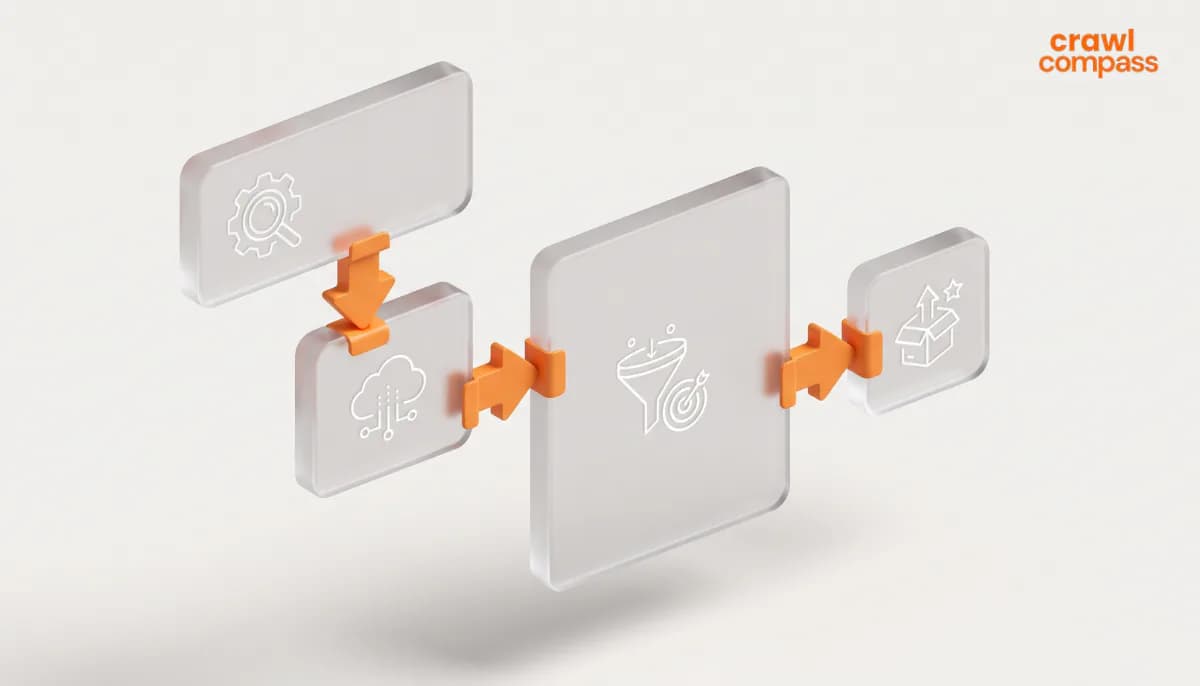
AEO isn't going to work by itself. It comes down to making your content easy for AI systems to read, trust, and cite. Two things drive that: understanding how LLMs process information and knowing which technical factors push your content to the top of their search results.
The Role of LLMs
LLMs like GPT-4, Gemini, and Claude are trained on massive datasets of web content. When a user asks a question, the model doesn't search in real time. It synthesizes an answer from patterns it learned during training, often combined with live retrieval via RAG (Retrieval-Augmented Generation), which pulls from indexed web pages.
For your content to get cited, three things need to be true. The model must be able to extract a clean answer from your text. Your content must cover the topic thoroughly enough to signal authority. And your page must be technically accessible, fast, crawlable, and properly marked up.
Key Factors Behind AI Search Visibility
For your contents to reach the top of AI search visibility, it needs to cover these key factors:
- Structured formatting: H2s, H3s, bullet points, and FAQ sections make content easier for AI to parse.
- Natural language alignment: Content written in Q&A format mirrors how users prompt AI tools.
- Schema markup: Tells AI systems what your content actually is, not just what it says.
- Topical authority: Consistent, deep coverage of a subject signals domain expertise to AI crawlers.
- E-E-A-T signals: Author credentials, cited sources, and factual accuracy improve AI trust in your content.
- Content freshness: AI tools favor current information, especially on fast-moving topics.
- Core Web Vitals: Page speed and technical health still determine whether your content gets crawled and retrieved at all.
Effective AEO Optimization Strategies
There's no single switch to flip. AEO is the result of several overlapping habits done consistently. Here are the five that move the needle most.
1. Use a Clear Content Structure
AI systems scan content fast. They look for headers, signal words, and clean answer blocks.
Use H2 and H3 headers that reflect actual questions your audience is typing. Add an FAQ section at the end, using questions from Google's "People Also Ask," AnswerThePublic, or Reddit. Write answer-first paragraphs: put the core answer in the first sentence, then explain. Keep paragraphs short and use bullet points for anything with more than two items.
One practical rule: if you stripped all the prose and left only the headers, would a reader still understand your argument? If yes, you're on the right track.
2. Apply Schema Markup
Schema markup is structured data code, typically written in JSON-LD, that you add to your HTML. It tells search engines and AI systems exactly what your content represents, not just what it says.
The schema types most relevant to AEO:
- FAQPage: marks up Q&A pairs and increases your chances of appearing in featured dropdowns and AI citations
- Article / NewsArticle: signals content type, author, and publication date
- HowTo: ideal for step-by-step guides, a format AI tools often surface
- BreadcrumbList: helps AI understand your site structure
Use Google's Rich Results Test to validate your schema before publishing.
3. Build Topical Authority Consistently
One well-optimized article isn't enough. AI engines favor domains that demonstrate deep, consistent expertise in a subject area.
Build content clusters: a central pillar page covering a broad topic, supported by detailed sub-pages. Interlink them so AI crawlers can map the relationships between your content. Cite authoritative sources in your articles, including government data, academic research, and industry reports. Publish on a consistent schedule so your domain signals active, ongoing maintenance.
Avoid publishing thin content outside your core niche. It dilutes your authority signals across the board.
4. Optimize for Voice Search
Voice queries are longer and more conversational than text searches. Optimizing for them directly supports AEO, as voice assistants rely on the same natural language processing that powers AI tools.
Target question-based keywords like "What is the safest way to invest in gold for beginners?" rather than just "gold investment." Write content that sounds natural when read aloud: short sentences, plain vocabulary, direct answers. Aim for the featured snippet position, as that's the text most commonly read aloud by voice assistants.
5. Update Your Content Regularly
AI systems that use real-time retrieval prioritize fresh, accurate content. Outdated articles lose ground fast, especially on topics where data changes often.
Set up a content audit calendar and review high-value articles every 3 to 6 months. Update statistics, dates, and regulatory references whenever they change. Add a visible "Last Updated" date to your articles; it signals freshness to both users and AI systems. When you update, also expand thin sections and add new FAQs based on emerging questions.
How to Measure AEO Success

AEO requires a broader measurement framework than SEO. You're tracking visibility across AI-powered surfaces, not just a rankings dashboard. Here's where to start.
1. Monitor Brand Mentions in AI Platforms
Start by testing AI tools directly. Query ChatGPT, Perplexity, Google AI Overviews, and Bing Copilot with the questions your brand should answer. Record whether your site gets cited.
Build a test query log: a list of 20 to 50 target questions you run monthly across AI tools to track citation frequency over time. Use brand monitoring tools like Mention or Brand24 to track when your content is referenced across the web. Pay attention to accuracy too, not just frequency. Is your brand being cited correctly?
2. Track Changes in Featured Snippets and Organic Search
Featured snippets are the clearest proxy for AEO performance. They reflect the same "best answer" logic that AI tools use.
Use Google Search Console to monitor impressions and clicks from Position 0. Tools like Semrush or Ahrefs can show which keywords trigger featured snippets for your domain. Track your "People Also Ask" appearances too; they indicate Google considers your content authoritative enough to answer related questions. Monitor week-over-week changes in impressions for question-based queries starting with who, what, when, where, why, or how.
3. Measure Traffic Quality and Search Volume
As zero-click searches grow, raw traffic numbers may drop even when your AEO performance improves. Shift your focus toward quality signals instead.
Monitor direct traffic and branded search volume. Users who discover your brand through AI answers often return via direct URL or branded search. Track time on page, scroll depth, and pages per session to see if AI-referred visitors actually engage. Also track conversion rate and lead quality. Users who find you through AI citations are often further along in their decision journey than cold organic visitors.
Read also: Understanding Search Intent for SEO & Its Types
Start Optimizing for Both SEO and AEO Today
SEO and AEO are not competing strategies. They work best when you run them together. SEO builds the foundation: your site authority, your backlinks, your technical health. AEO builds on top of that foundation by making your content readable, citable, and trustworthy enough for AI tools to surface it as an answer. Brands that treat them as separate efforts end up optimizing for half the picture.
The shift is already happening. Search is no longer just a list of links, and your audience is no longer just clicking through to find answers. They're asking AI tools directly, and they're trusting whatever gets cited first. The brands that show up consistently in those answers are the ones investing in both disciplines right now, not waiting until the gap gets wider.
Want to make sure your AEO and SEO strategy is heading in the right direction? Crawl Compass offers AI SEO services that can help your brand not only reach the first page of Google, but also become the answer in ChatGPT, Perplexity, and Gemini. Talk toour team today.