You pull out your phone, type "best pizza near me," and pick one of the top three results on the map. You don't scroll down to page two. You don't even look at the regular website links below the map.
Neither do your customers.
If you run a business that serves a specific geographic area, generic marketing advice will not save you. Ranking nationally for a broad keyword means absolutely nothing if the person searching lives a thousand miles away. You need foot traffic, local phone calls, and actual neighborhood visibility.
Let's break down exactly what is local seo, why it requires a completely different playbook than traditional search marketing, and the exact steps you need to take to take over your local market.
What Is Local SEO?
When industry professionals talk about local search, they are talking about a highly specialized algorithm.
According to Semrush's guide on the topic, local SEO is the process of optimizing a business's visibility in unpaid, location-based search results on Google Search, Google Maps, and other search engines.
Any search query that has local intent like "plumber in Chicago," "gyms near me," or even just "coffee shop" when your phone's GPS is turned on and triggers this specific algorithm. Google responds by displaying the "Local Pack" (often called the Map Pack).
This is a block of three business listings complete with star ratings, addresses, and operating hours, positioned at the very top of the page. If your business is not optimized to appear in that specific three-pack, the majority of that highly lucrative local traffic is going straight to your competitors.
Read also: What Is SEO? Definition, How It Works, and Its Benefits
The Core Differences: Local vs. Regular SEO

A mistake businesses make is treating local and national SEO as the exact same thing. They require completely different strategies.
Regular search optimization focuses on pushing your website to a global or national audience. Local optimization is hyper-focused on winning a specific zip code or city radius. To make this as simple as possible, here is a breakdown of how the two approaches compare.
Feature | Regular (Traditional) SEO | Local SEO |
|---|---|---|
Primary Goal | Drive broad traffic to a website from anywhere. | Drive foot traffic and phone calls from a specific city or radius. |
The Main Target | The standard "blue link" organic search results. | Google's "Local Pack" (The top 3 map listings). |
Top Ranking Factors | Content depth, backlink profiles, domain age. | Geographic proximity, Google Business Profile, and local citations (NAP). |
Competition Pool | Millions of websites globally. | Only the businesses located in your immediate physical area. |
Best Suited For | SaaS companies, global e-commerce, national blogs. | Restaurants, local contractors, clinics, and service-area businesses. |
How the Local Algorithm Actually Works
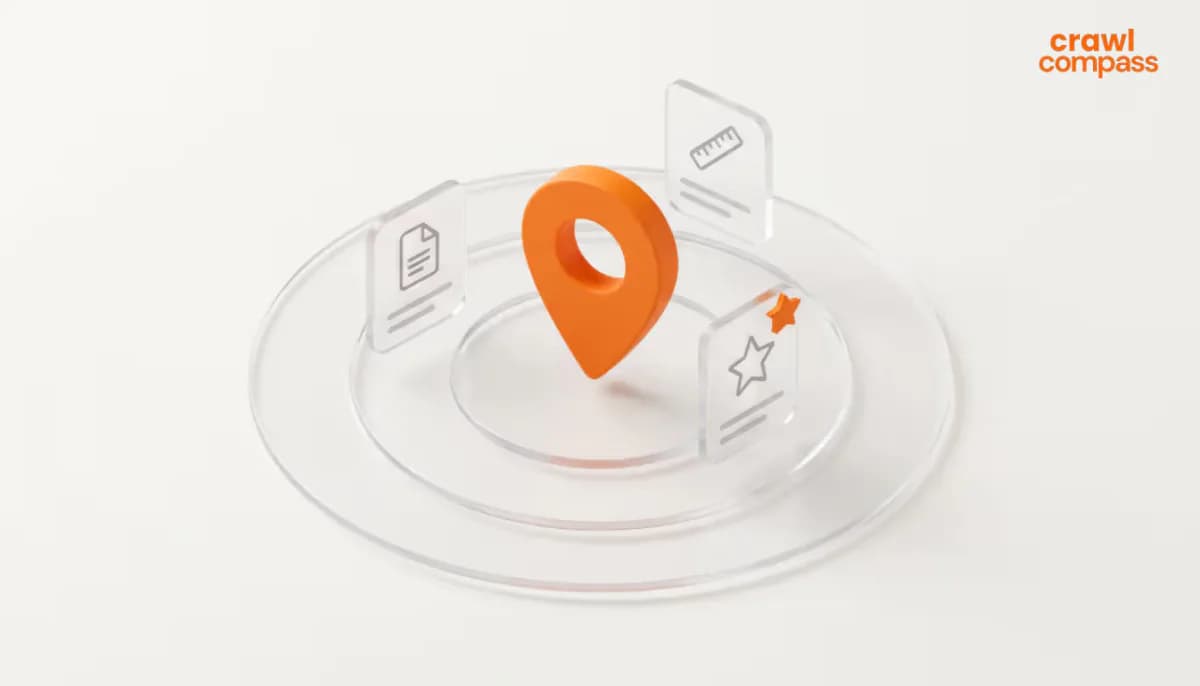
Google uses a different set of rules to decide who wins the top spots on the map. Instead of just looking at website authority, the local algorithm relies on three distinct pillars.
1. Proximity (Distance)
You cannot trick Google about where you are located. The algorithm heavily prioritizes businesses that are physically closest to the user at the exact moment they hit search. If you are standing in downtown Austin and search for tacos, Google will not show you a highly-rated taco shop in the suburbs. Distance is the one factor you cannot fully control, but you must make your actual address crystal clear to the search engine.
2. Relevance
Does your business actually do what the user wants? Google checks your digital footprint to see how closely your services match the search query. The more detailed and accurate your business categories and website content are, the easier it is for Google to connect you with the right customers.
3. Prominence
This is all about your offline reputation translated to the online world. Google wants to recommend businesses that people actually like. Prominence is fueled heavily by the total number of customer reviews you have, your average star rating, and how often your business is mentioned across local directories. According to Whitespark's 2026 Local Search Ranking Factors study an annual survey of 47 leading local SEO experts review signals account for roughly 20% of Local Pack ranking weight, second only to your Google Business Profile itself, making these trust signals one of the strongest drivers of local ranking performance.
Why You Can't Ignore Local Search
Still on the fence about dedicating resources to this? Here is why mastering local search completely changes the trajectory of a brick-and-mortar business.
It Targets "Ready-to-Buy" Customers
Local searches carry a lot of buyer intent. People searching for a local service are not usually doing casual research. They have a problem that needs fixing today. Data from Think with Google highlights that around 76% of people who run a local smartphone search visit a related business within 24 hours. Even better, 28% of those searches result in a direct purchase.
It Builds Instant Trust
Consumers are deeply skeptical of ads. When your business appears organically in the Map Pack with dozens of glowing reviews, it creates instant social proof. According to BrightLocal’s 2026 Local Consumer Review Survey, 97% of consumers read online reviews before choosing a local business. And 41% now say they ‘always’ check reviews first, up from just 29% the year before. You build unbreakable trust without spending a dime on paid ads.
It Defeats Massive Corporations
Local optimization levels the playing field. A massive national chain with a multi-million dollar marketing budget can easily be outranked in the Map Pack by a small, independent shop that simply has a better-optimized Google Business Profile and stronger local community ties.
The 7-Step Playbook for Local Dominance

Most guides give you a list of a hundred different tactics. Let's cut the noise. Here are the seven highest-impact steps you need to take right now.
1. Claim and Perfect Your Google Business Profile
Your Google Business Profile (GBP) is the engine of your entire local strategy. Claim your listing and fill out every single field available. Choose your primary business category very carefully. Upload high-quality photos of your storefront, your team, and your work. Businesses with photos receive significantly more requests for directions than those with bare profiles.
2. Lock Down Your NAP Consistency
NAP stands for Name, Address, and Phone Number. This data must be identical everywhere it appears on the internet. If your address is listed as "Street" on your website but abbreviated to "St." on Yelp, that tiny discrepancy confuses Google's algorithm. Audit your citations across the web and make them uniform.
3. Attack Localized Keywords
Stop trying to rank for broad terms like "plumber." You need to target "emergency plumber in [Your City]." Use tools like Semrush or Ahrefs to find exactly what your local community is searching for. Weave these geographic keywords naturally into your website's headers, title tags, and body paragraphs.
4. Build a Review Generation Machine
You need a system to generate reviews constantly. Train your staff to ask for reviews after a great customer interaction. Send automated text messages or emails containing a direct link to your Google review page. Just as importantly, you must reply to every single review you receive—both the good and the bad. This proves to Google that you actively manage your brand.
5. Earn Localized Backlinks
A link from a national website is great, but a link from your local Chamber of Commerce or a regional news outlet is absolute gold for local SEO. Sponsor local events, partner with neighboring businesses, or host community workshops to earn links that prove your deep ties to the specific city you operate in.
6. Implement Local Schema Markup
Schema markup is essentially a secret language that translates your website content directly into code that Google understands instantly. Adding "Local Business" schema to your website feeds Google your exact coordinates, operating hours, and service categories without making the algorithm guess.
7. Create Dedicated Location Pages
If you serve multiple cities or operate several branches, do not just list them all on a single contact page. Build a dedicated, highly optimized landing page for every single location. Include local testimonials, city-specific services, and an embedded Google Map on each page.
Understanding the 4 Pillars of SEO
While local search is your primary focus for driving foot traffic, it is important to understand where it fits into the broader marketing ecosystem. A truly dominant website balances four distinct pillars.
Local SEO: Optimizing your presence for Map Pack visibility and localized queries.
On-Page SEO: Crafting the actual content on your website, optimizing title tags, and ensuring your pages perfectly answer user intent.
Off-Page SEO: Building authority through external sources, primarily by earning high-quality backlinks from other reputable websites.
Technical SEO: The backend foundation. Ensuring your site loads incredibly fast, looks perfect on mobile devices, and has a clean structure that search engine bots can easily crawl.
Read also: Understanding Search Intent for SEO & Its Types
Build a Foundation That Lasts
Optimizing your local presence is never a "set it and forget it" task. Search algorithms constantly update, new competitors enter your city, and customer behaviors shift.
The businesses that consistently win are the ones that treat their local digital presence as an ongoing operation. Earning a top spot on the map takes time, but the resulting stream of highly motivated, ready-to-buy customers is worth the effort.
If you are ready to stop guessing and maximise your local reach, the Crawl Compass team is here to guide you. From deep technical audits to comprehensive Local SEO Services, we build the digital foundation your business needs to grow. Contact our team today to learn more.