Conversion Rate Optimization (CRO): Definition, Benefits, and How It Works

Conversion Rate Optimization (CRO): Definition, Benefits, and How It Works

Learn CRO, how it works, and the strategies and tools to boost conversions and website performance.

A clean ilustration of conversion rate optimization

Have you ever spent millions on ad budgets every month, watched your website traffic grow, yet sales stay flat? You're not alone.

Many online business owners run into the same wall. People come to the site, scroll for a moment, then leave without doing a thing. No purchases, no sign-ups, no leads. The budget just disappears.

The problem isn't traffic volume. The website simply isn't built to turn visitors into leads. That's where conversion rate optimization comes in as a smarter move than throwing more money at acquisition.

This article breaks down what conversion rate optimization is, how it works, the benefits, proven strategies, and the tools practitioners actually use. Let's get into it.

What Is Conversion Rate Optimization (CRO)?

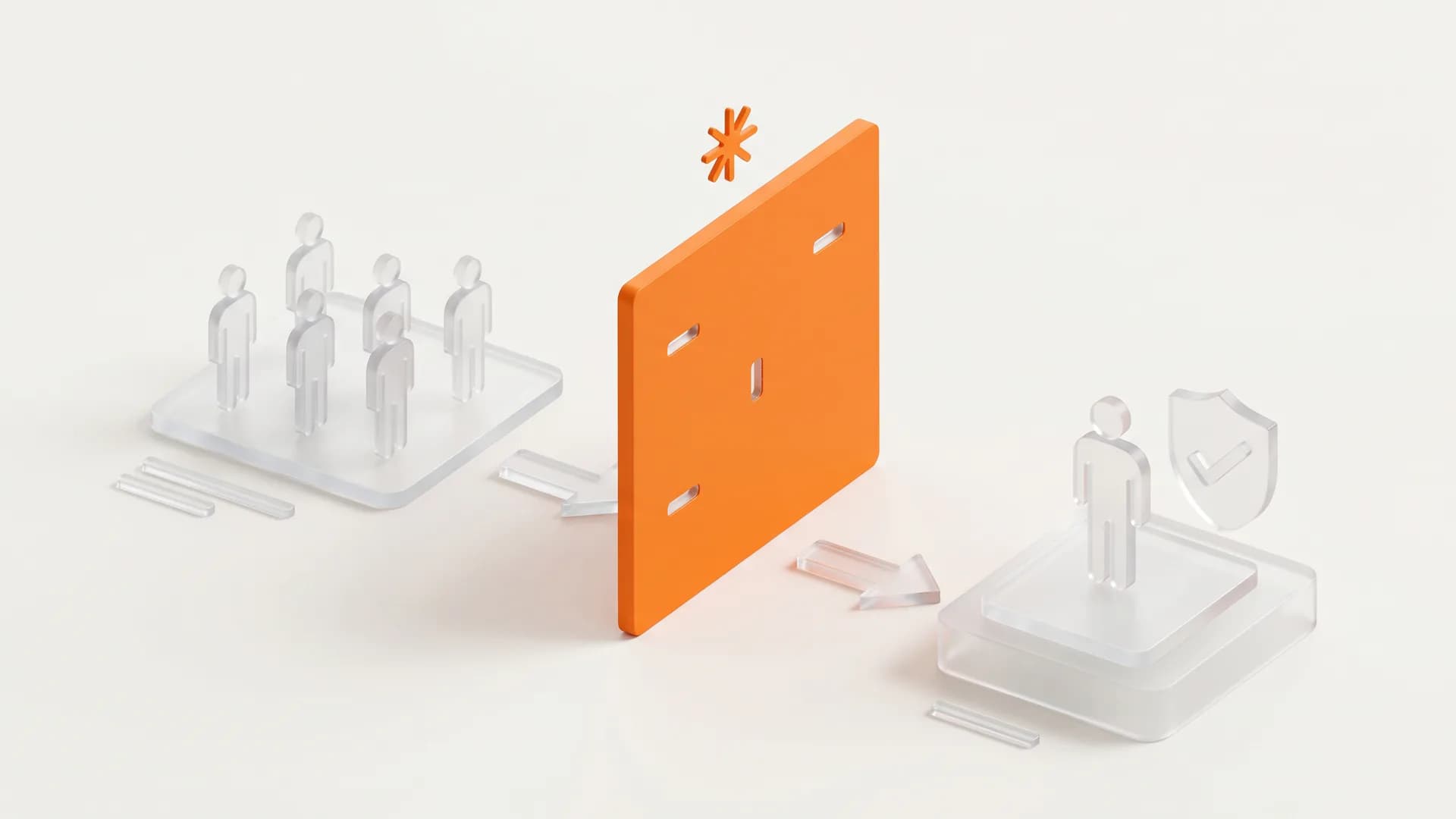
Illustration of a website conversion funnel showing visitors entering at the top and a smaller group completing a desired action at the bottom.

Many people ask, "What is conversion rate optimization, and why does it matter so much for digital businesses?” 

Conversion rate optimization is a systematic process of increasing the percentage of website visitors who take a desired action, such as making a purchase, signing up for an account, filling out a form, or requesting a demo.

In simple terms, CRO is a structured effort to maximize the value of every visitor already on your website, without spending additional budget to drive new traffic.

In digital marketing, CRO works alongside other strategies. SEO and paid ads bring people to your site. CRO makes sure those people actually do something once they get there. The better your conversion rate, the more value you get out of every dollar spent on traffic.

A good analogy is a salesperson at a physical store. They know when to share the right information, when to offer a deal, and how to guide someone toward a decision. CRO does that same job on your website, automatically, around the clock.

The Conversion Rate Formula

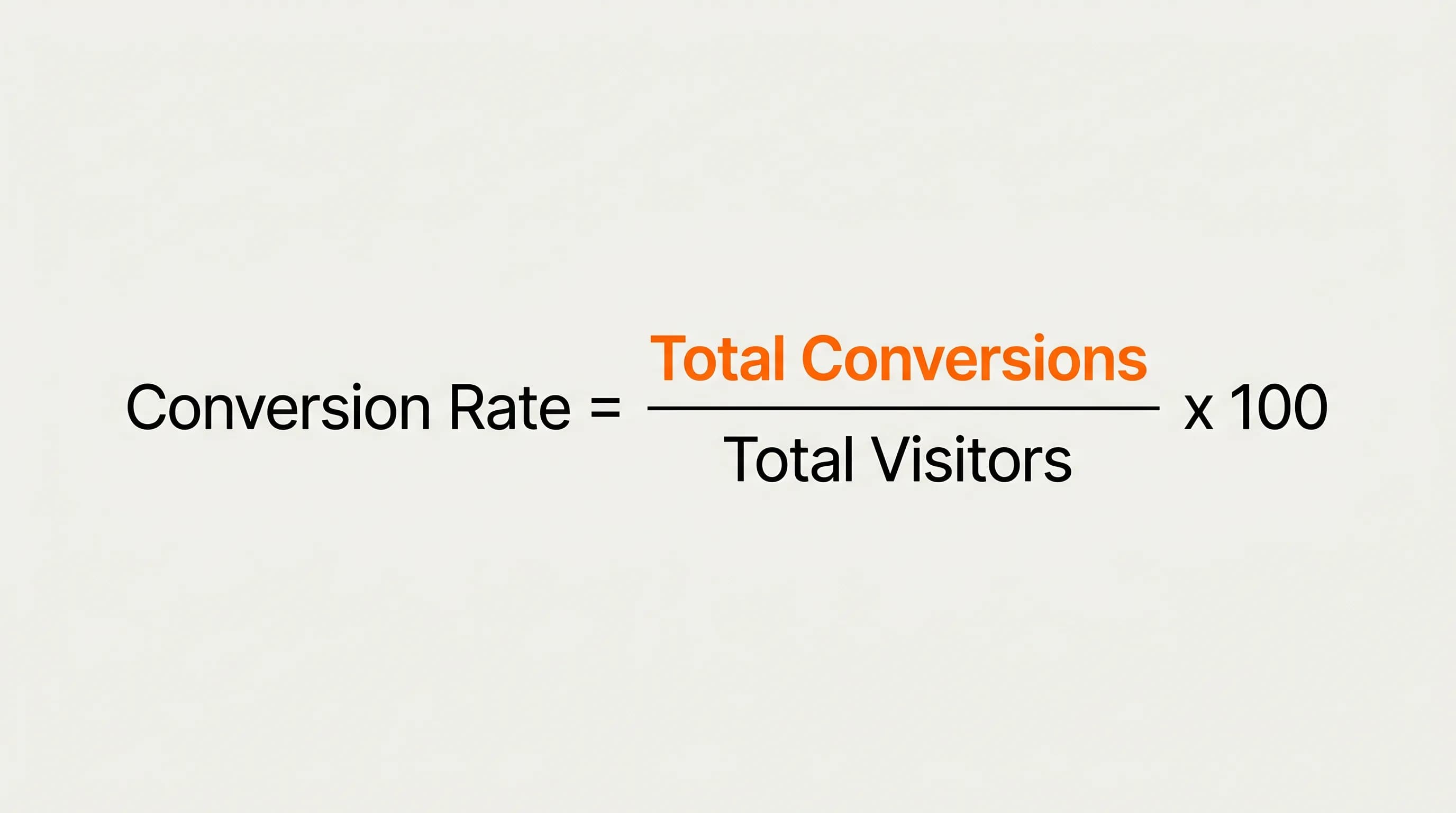
conversion rate formula illustration

Conversion rate is the percentage of website visitors who take a desired action within a given period, out of the total number of visitors. Here's the formula:

Conversion Rate = (Total Conversions ÷ Total Visitors) × 100%

Conversion Rate Calculation Example

If your landing page receives 15,000 visitors in a month and 300 people sign up as new users, the calculation looks like this:

Conversion Rate = (300 ÷ 15,000) × 100%

Conversion Rate = 0.02 × 100%

Conversion Rate = 2%

That means 2% of all visitors who arrived converted. This figure becomes your baseline for evaluating and optimizing your CRO going forward.

The Impact of Improving Conversion Rate

A small increase in the conversion rate can have an outsized impact. Say your website gets 10,000 visitors a month.

If the conversion rate is 2%:

(2 ÷ 100) × 10,000 = 200 conversions

If the conversion rate rises to 3% without increasing ad spend:

(3 ÷ 100) × 10,000 = 300 conversions

That’s an additional 100 conversions, a 50% increase, just from improving website performance.

What Is the Ideal Conversion Rate?

According to Larry Kim, founder of WordStream, the average landing page conversion rate across industries is around 2.35%. The top 25% of companies hit 5.31% or higher, and the top 10% reach 11.45% or above.

These numbers vary by industry, traffic source, and the action you're asking visitors to take. Financial services and free SaaS trials tend to convert better than e-commerce. Organic search traffic also tends to perform better than display ads.

The most relevant benchmark is your own current conversion rate. Any consistent improvement from that number means your CRO program is doing its job.

Why Is CRO Important for Your Website and Business?
Illustration comparing two scenarios: visitors leaving a website without converting versus visitors completing actions after CRO optimization.

Getting people to your website is only half the job. The money you spent on ads, SEO, and social media is already gone the moment someone reaches your site. CRO is how you make that spend count. Here are two main reasons why it matters:

1. Acquisition Investment Is Already Spent

Most marketing budgets go toward getting people to your site through ads, SEO, and social media. Once they arrive, that money is spent. CRO makes sure you get something out of it.

2. User Expectations Keep Rising

People expect websites to be fast, easy to use, and relevant to their needs. A website that doesn't meet those expectations will continue to lose potential customers, no matter how much traffic it gets. CRO helps your website keep up with what users actually want.

Benefits of Conversion Rate Optimization (CRO)
CRO doesn't just improve conversion numbers, it will impact multiple parts of your business. Here are the key benefits of running a consistent CRO program:

1. Deeper Understanding of Customer Behavior

CRO is fundamentally about understanding what drives customer conversion. Along the way, you learn how they browse, where they get stuck on your website, and what they need before making a decision. That knowledge goes beyond conversions.

It feeds into product development, content strategy, and ad messaging that actually resonates.

2. Improved User Experience

Confusing navigation, slow pages, and long forms are conversion problems, but they're also user experience problems. Fix them, and the experience improves for every single visitor.

Research from AWS found that around 88% of online shoppers won't return to a website after a bad experience. Every UX improvement through CRO doesn't just lift conversions today. It builds the kind of experience that keeps people coming back.

3. Lower Cost per Acquisition

Cost per Acquisition (CPA) is the amount you spend to acquire one new customer. CRO brings that number down by driving more conversions from the same traffic and budget.

For example, if you currently spend $20 to acquire one customer and your conversion rate doubles after CRO optimization, your cost per customer could drop to around $10 without adding more ads or switching keywords.

4. Higher Revenue and ROI

More conversions from the same traffic means every dollar you put into ads or SEO returns more than it did before.

Over the long term, CRO also strengthens the overall foundation of business growth. Higher conversion rates improve profitability, free up budget for growth, and build momentum that keeps compounding.

How Conversion Rate Optimization (CRO) Works

Most people think CRO is just about changing a button color or moving a CTA around. It's more than that. Effective CRO runs on a clear, data-driven process. Here's how it works:

1. Monitoring and Tracking Website Performance

CRO starts with understanding how your website is performing. Before making any changes, you need to know the conversion rate of each page, where your traffic comes from, what devices people use, and how users behave at each stage of the funnel.

Google Analytics 4 is one of the most commonly used tools for this. With the right tracking setup, you can automatically monitor conversion rates and spot differences between segments, such as mobile vs. desktop users or new vs. returning visitors.

2. Finding Areas That Need Optimization

Once you have the data, identify which pages need the most attention. You don't have to fix everything at once. Start with the pages that have the most obvious problems.

A high bounce rate usually means visitors didn't find what they expected. Exit pages show where people are dropping off before converting. Pages with high traffic but low conversion are worth prioritizing because the audience is already there, the page just isn't doing its job yet.

3. Continuous Optimization Process

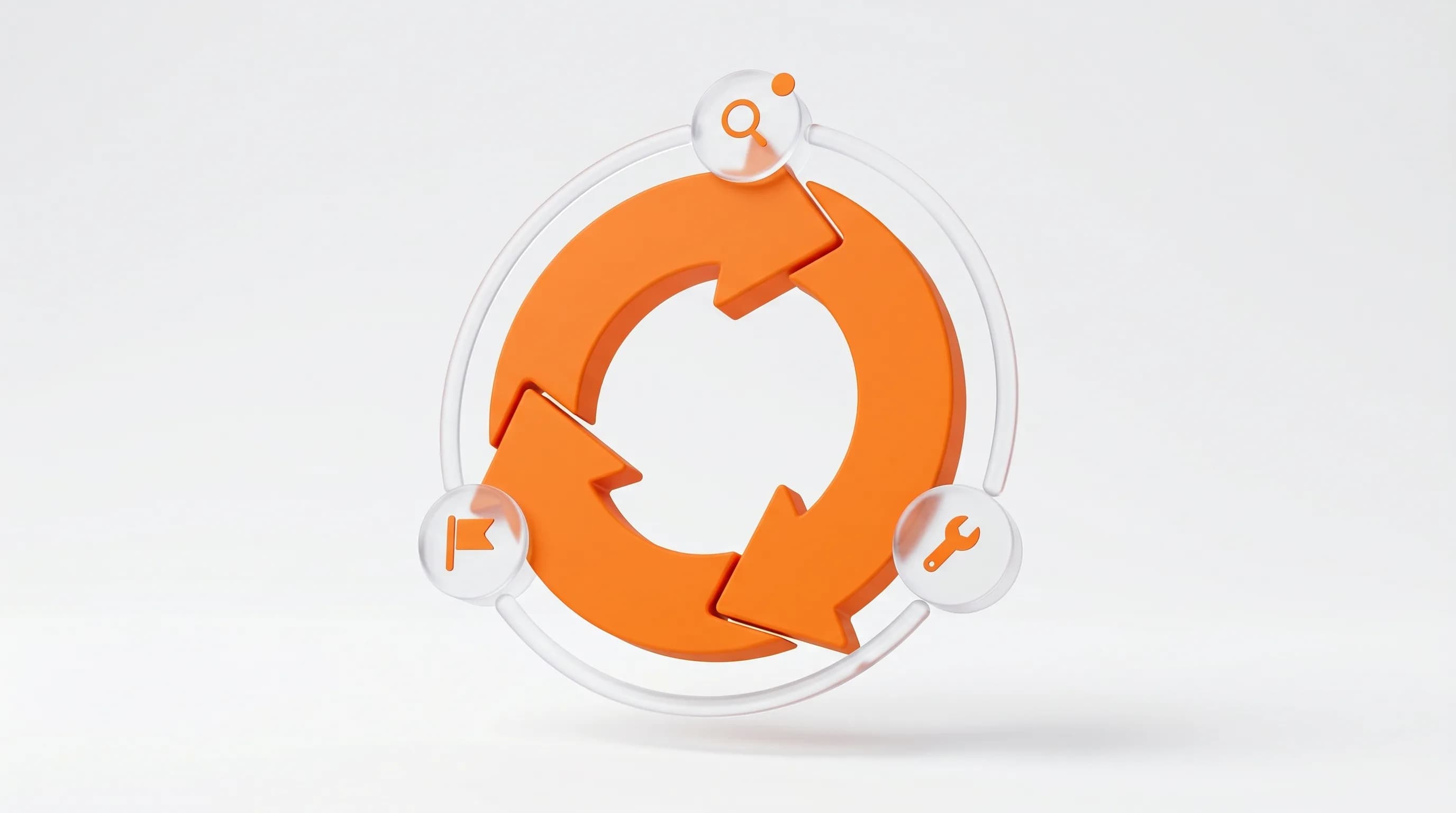
CRO is an ongoing process, not something you do once and forget. It runs in a cycle. Observe, form a hypothesis, test, implement, then evaluate. Each round gives you new information to work with in the next.

The cycle never really ends because the digital landscape keeps changing. User behavior shifts, markets move, and technology evolves. Businesses that consistently run this process tend to pull ahead of those that optimize once and then move on.

Key Elements in Running CRO

Running an effective CRO program means paying attention to several key elements. Knowing what each one does will help you figure out where to start and what to focus on first.

1. Homepage

The homepage is usually the first thing visitors see. It sets the first impression and decides whether someone stays to explore or leaves right away.

A strong homepage answers three things visitors want to know: what the website offers, whether it's relevant to them, and what they should do next. Good design, clear navigation, a value proposition that comes across in the first five seconds, and an easy-to-spot CTA are all non-negotiable.

2. Landing Page

Landing pages are built for one purpose: to get visitors to take a specific action, such as signing up, making a purchase, downloading, or reaching out to the sales team.

An effective landing page leads with a headline that speaks directly to what the audience needs. It backs that up with visuals, social proof like testimonials or user counts, a simple form, and a CTA that stands out. No navigation menus, no extra links, nothing that pulls attention away from that one action.

3. Blog and Content

Blog content drives a lot of organic traffic, but without a CRO strategy, most readers will finish the article and leave without taking any action.

Good writing keeps people on the page longer and moves them toward the next step. That could be signing up for a newsletter, clicking a CTA, or exploring another page. Copywriting across the whole site plays a big role in making that happen.

4. Call-to-Action (CTA)

A CTA (call-to-action) is the element that directly guides visitors toward converting. Without an effective CTA, even the best content will fail to generate conversions. 

Effective CTAs use strong action verbs like “Download Now”, “Try Free for 7 Days”, or “Get the Offer”. Make it specific, visually distinct, and place it where people are most likely to act: above the fold, after a product description, or right after a testimonial.

5. Conversion Research

Conversion research is the foundation of any CRO program. Without knowing how users actually interact with your website, any optimization is just guesswork.

Getting insights involves several tools, such as web analytics like Google Analytics for quantitative data, heatmaps to visualize visitor click and scroll patterns, and surveys and polls to gather qualitative insights directly from users.

6. Website Persuasion

A persuasive website gets visitors to act. Strong copywriting, social proof, a clear value proposition, and visual design that guides the eye all work together to make that happen.

Principles like urgency, scarcity, social proof, and authority can be applied ethically in website persuasion to increase the likelihood that visitors will convert.

7. User Experience (UX)

None of the above matters if the website is hard to use. Visitors won't convert on a slow, confusing, or frustrating site, regardless of how good the content or product is.

The UX elements that most affect conversion rate are intuitive navigation, forms that ask only for what's truly needed, fast loading times, since every extra second can cut conversions by around 7%, and a mobile-friendly design, given that more than half of all traffic now comes from mobile devices.

6 Proven Conversion Rate Optimization Strategies

There are many ways to run CRO. Here are some strategies that have delivered measurable results across different types of businesses.

  • Data-Driven Landing Page Optimization: Align page content with the intent of your traffic source, remove navigation menus from standalone landing pages, and make sure the main CTA is visible without scrolling.

  • Strong CTAs on Every Strategic Page: Focus on what visitors will get, not what they have to do. “Try Free for 7 Days” is far more effective than “Click Here”.

  • Specific and Credible Social Proof: Testimonials with full names and photos are more convincing than anonymous quotes. Place them near your main CTA and pricing pages.

  • Website Speed: Use Google PageSpeed Insights to measure performance, then prioritize image compression and reducing unnecessary JavaScript.

  • Mobile Optimization: Make sure buttons are easy to tap, forms support autofill, and the checkout flow is tested across multiple devices.

  • High-Ranking Pages with Low Conversion: Identify the pages that generate the most conversions, then apply that formula to pages that haven’t been optimized yet.

9 Steps to Running Effective CRO

Effective CRO follows a structured process. Observation, hypothesis, testing, and continuous improvement. Each step is covered below:

1. Define Goals with SMART Goals

CRO starts with clear and measurable objectives. A goal like "increase sales" is too vague to act on. Use the SMART framework, which stands for Specific, Measurable, Attainable, Relevant, and Time-bound.

A good CRO goal looks something like this. Increase the conversion rate on the pricing page from 3% to 5% within three months by optimizing CTA placement and adding social proof. That kind of goal tells you exactly which page to work on and what part of the user journey to focus on.

2. Measure Your Current Conversion Rate

Before making any changes, establish an accurate baseline. Calculate your website's current conversion rate and break it down by device type, traffic source, and whether visitors are new or returning.

Make sure your tracking is set up correctly before you start. Bad data leads to bad decisions, and that ends up costing more than doing nothing.

3. Collect Data and Conduct Research

Once your baseline is set, the next step is figuring out why visitors aren't converting. Combine quantitative data, such as funnel metrics and bounce rates, with qualitative data from heatmaps, session recordings, user surveys, and sales team feedback.

Good research covers several angles. Run funnel analysis to see where visitors drop off, use heatmaps to see where attention goes, watch session recordings to follow individual visitor journeys, and look at competitors through content and SEO audits.

4. Identify the Biggest Barriers

Use your data to identify where most visitors leave the conversion funnel. Then narrow it down to the one to three barriers that are affecting the most users and causing the biggest drop-off.

Don't try to fix everything at once. The most impactful issues are often not where you'd expect them. Some are buried in pages you rarely look at, or in steps that seem minor but are quietly blocking a large number of users. Let the data guide you, not your gut.

5. Build Testable Hypotheses

A good CRO hypothesis covers three things. What change will be made, what outcome is expected, and which metric will measure success. For example, if the checkout process is reduced from four steps to two, more users will complete their purchases because there's less friction.

If you have multiple hypotheses to test, use the RICE scoring framework to prioritize. Multiply Reach, Impact, and Confidence, then divide by Effort. The one with the highest score goes first.

6. Run the Tests

Once a hypothesis is ready, run it through A/B testing or multivariate testing. Show different versions to different user groups simultaneously, then compare the results to see which performs better.

Let the test run long enough to reach statistical significance. The industry standard sits between 90% - 95% confidence. If a test doesn't produce a clear winner, that's fine. Every result, positive or negative, tells you something real about how users behave on your site..

7. Implement Changes and Monitor Results

When one version clearly outperforms the other, roll it out to all visitors. Keep your tracking active to monitor its performance after the change goes live.

Results that look strong early on don't always hold up over time since visitor behavior can shift. Document what you changed and what happened so you have a reference point for future tests.

8. Iterate and Continuously Improve

CRO is not a one-time project. Once one area is optimized, move on to the next. There's always another part of the funnel to improve, and the goal is to keep every section performing as well as possible.

User expectations and market conditions also evolve over time. Areas you've already worked on will need to be revisited at some point. What worked last year won't always work the same way today.

9. Integrate CRO with Your Broader Marketing Strategy

CRO works best when it's connected to the rest of your marketing. The data and insights you collect along the way can sharpen your ad copy, email subject lines, product messaging, and even customer service.

Coordinate with your SEO and paid acquisition teams as well. If traffic to a landing page comes from paid ads, that page's conversion rate directly affects the campaign's overall Return on Ad Spend (ROAS).

Testing Techniques in CRO

You can make all the changes you want, but without testing, you'll never really know what's working. Here are the main testing techniques used in CRO:

1. A/B Testing

A/B testing is the most common method. You create two versions of a page or element, show each one to a different group of visitors at the same time, then see which one converts better.

You can test almost anything: headlines, hero images, CTA color and text, the number of form fields, or where social proof sits on the page. Just make sure you only change one thing at a time so you know exactly what made the difference.

2. Multivariate Testing

Multivariate testing works differently. Instead of comparing two versions of a page, it tests multiple variations of multiple elements simultaneously to find the combination that performs best.

This method makes the most sense when your page gets enough traffic to yield reliable results quickly and when you want to fine-tune several elements at once rather than one by one.

3.  Significance in CRO Testing

Statistical significance tells you whether your test results are real or just a coincidence. The higher your confidence level, the more certain you can be that the winning version actually performed better, not just got lucky.

The industry standard for confidence level is 90–95%. That means you need to be confident at that level that the observed difference between version A and B is genuine before making any decision based on the test results.

What to Do When You Can't Reach Statistical Significance?

Not reaching statistical significance doesn’t mean the test failed. This is quite common, especially on websites with mid-level traffic volumes. Here are five approaches you can take when a test doesn’t reach the required significance:

  • Direct Implementation: If the change you’re testing is already an established best practice, or your visitors have confirmed it in user interviews, go ahead and implement it without waiting for test results.

  • Make Bigger Changes: Instead of swapping out one word in the headline, overhaul the entire messaging approach for that page. Bigger changes produce more visible effects.

  • Test Across Multiple Pages at Once: If traffic on one page is too low, run the same hypothesis on multiple pages simultaneously to gather enough data for analysis.

  • Use Micro Conversions: If traffic on a page is too small, run the same hypothesis across multiple pages simultaneously to collect enough data.

  • Move On to the Next Hypothesis: Not every hypothesis will succeed, and that’s a normal part of the CRO process. Move on to another hypothesis with greater potential impact.

Tools for Conversion Rate Optimization

The right tool stack makes the optimization process both easier and more accurate. Here are the main tool categories you’ll need in a CRO program:

1. Analytics Tools

Google Analytics 4 is the foundation of any CRO program. It gives you visibility into traffic volume, conversion rate, funnel drop-offs, and visitor behavior. GA4 is free and powerful, but it only shows you what is happening, not why.

The conversion funnel reports in GA4 are particularly useful for identifying where visitors are exiting before completing the desired action.

2. Behavioral Tools (Heatmaps and Session Recordings)

Behavioral analytics tools show how visitors interact with your website. Heatmaps reveal click, scroll, and attention patterns on key pages, so you can see whether visitors are ignoring CTAs or not scrolling far enough to reach important content.

Session recordings let you observe individual visitor journeys and spot friction patterns like rage clicks or hesitation. Popular tools in this category include Hotjar, Microsoft Clarity, and Crazy Egg.

3. Testing Tools

A/B testing tools provide the infrastructure to run controlled experiments at scale, including traffic splitting, statistical significance calculations, and variant management. Popular tools in this category include Optimizely, VWO (Visual Website Optimizer), and Google Optimize.

The key principle to remember: running tests on page elements you identified through heatmap patterns is fundamentally different from running tests based purely on a designer’s preferences.

4. Feedback Tools

On-site surveys, live chat, and user interviews round out your qualitative understanding of visitors. Analytics show you behavior. Surveys reveal the intent and reasoning behind it.

Exit-intent surveys that appear when a visitor is detected about to leave the page are a massively underused CRO asset. A simple question like “What almost stopped you from signing up?” can uncover barriers and objections that won't show up in analytics data alone.

The Role of AI in Modern CRO

CRO no longer relies solely on manual analysis. With AI, the process is faster, and the insights are sharper. Here are some of AI’s roles:

  • Faster Analysis: Thousands of session recordings can be processed in seconds, not hours.

  • More Specific Insights: Your team can immediately understand visitor behavior without processing data individually.

  • Easier Pattern Identification: AI can also surface user behavior patterns often missed in manual analysis.

  • Clearer Priorities: Your team can focus on the most impactful problems without guessing.

  • Human Judgment Still Required: AI can accelerate analysis, but strategic decisions still require human judgment.

CRO vs SEO: What’s the Difference?

CRO and SEO are two strategies that often come up together, but they have different focuses. Understanding the differences and their relationship will help you integrate them effectively into a single digital marketing strategy. Here’s how they compare:

Aspect

SEO

CRO

Primary Focus

Bringing in more traffic from search engines

Converting existing traffic into conversions

Goal

Improving ranking in SERPs

Increasing the percentage of visitors who take action

Key Metrics

Organic traffic, keyword ranking

Conversion rate, revenue per visitor, CAC

How It Works

Content, technical, and backlink optimization

Design, messaging, UX, and testing optimization

Results Timeline

Medium to long-term

Can be seen within weeks

Many CRO improvements, such as faster load times, better mobile UX, and clearer content, also benefit SEO. Conversely, SEO that drives more relevant, higher-quality traffic will produce better conversion rates. Both are most effective when worked on together and in coordination.

Higher Conversions Start with Better Understanding

Many people think CRO is just about changing the look or layout of a page. CRO is about understanding why visitors aren’t converting, removing the barriers, and continuously improving that experience based on data.

So, it’s important to understand that CRO and SEO are two complementary strategies. SEO is optimized to drive traffic, while CRO ensures that traffic converts.

If you’re looking to get started but don’t know where to begin, the Crawl Compass team is ready to help. Consult your SEO strategy and website optimization with Crawl Compass’s SEO consultant services for more measurable results. Consult now ➝

Frequently Asked Questions About Conversion Rate Optimization

Still have questions about conversion rate optimization? Here are some of the most commonly asked questions.

1. How long does it take to see results from CRO? 

Initial results can appear within a few weeks after your first test is completed. A meaningful CRO program typically takes 3 to 6 months to deliver consistent improvements.

2. Is CRO only relevant for e-commerce? 

No. CRO applies to any digital business with a goal for visitors to complete, whether signing up, contacting your team, or downloading content.

3. What is the minimum traffic needed to run A/B testing? 

You need at least 1,000 unique visitors per variant to reach adequate statistical significance. If traffic is still low, focus on best practice improvements first.

4. What is the difference between CRO and UX design? 

UX design focuses on the overall user experience, while CRO targets the specific percentage of visitors who take a desired action. Both are complementary.

5. Can CRO hurt existing SEO performance? 

When done correctly, CRO supports SEO. Just ensure no changes are made to remove content that already holds strong organic rankings.

You might also like

Explore the freshest content and stay informed with our most recent posts.

Ilustration of programmatic SEO

|

May 8, 2026

Learn what programmatic SEO is, how it works, and how this strategy helps your website target thousands of keywords at once

Ilustration of SEO in Digital Marketing

|

May 8, 2026

SEO in digital marketing helps your business appear on the first page of Google. Learn how it works, types, and benefits here!

Illustration SEO marketplace

|

May 7, 2026

Learn SEO marketplace in a practical way, from its definition and benefits to optimization tips so your products are easier to find and your traffic keeps growing.

Ilustration of programmatic SEO

|

May 8, 2026

Learn what programmatic SEO is, how it works, and how this strategy helps your website target thousands of keywords at once

Ilustration of SEO in Digital Marketing

|

May 8, 2026

SEO in digital marketing helps your business appear on the first page of Google. Learn how it works, types, and benefits here!

Illustration SEO marketplace

|

May 7, 2026

Learn SEO marketplace in a practical way, from its definition and benefits to optimization tips so your products are easier to find and your traffic keeps growing.

A clean ilustration of conversion rate optimization

|

May 6, 2026

Learn CRO, how it works, and the strategies and tools to boost conversions and website performance.